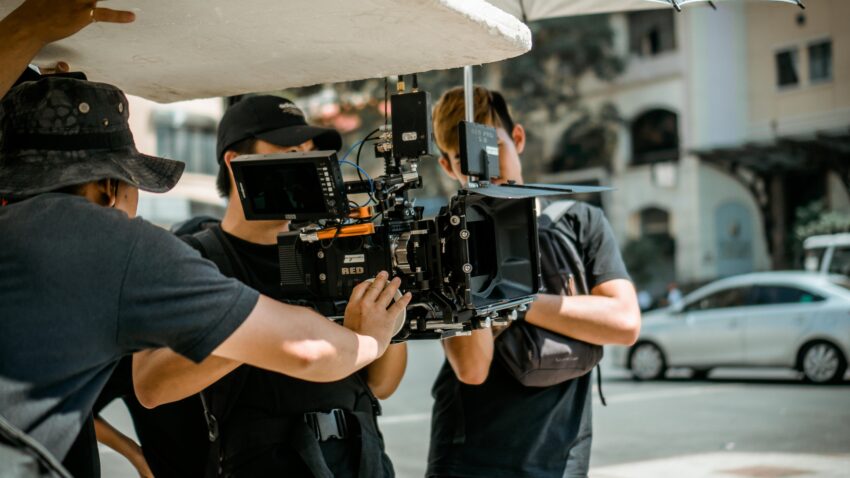
The magic of cinema has always depended on the ability to show audiences things they’ve never seen before. From the earliest days of filmmaking to today’s blockbuster spectacles, special effects have transformed how stories are told on screen. The journey from simple camera tricks to photorealistic digital creations represents one of the most fascinating aspects of Hollywood’s history, showcasing human creativity and technological innovation working hand in hand.
The Silent Era and Practical Magic
Special effects in Hollywood began with clever tricks that amazed audiences in the early twentieth century. Georges Méliès, though French, influenced Hollywood greatly with films like A Trip to the Moon in 1902, using techniques like stop-motion and multiple exposures. These simple yet effective methods showed that cameras could create illusions impossible in the theater.
Hollywood quickly adopted and expanded these techniques. The Thief of Bagdad, in 1924, featured flying carpets and massive sets that transported audiences to fantastical worlds. Filmmakers achieved these effects through careful miniature work, matte paintings, and innovative camera techniques. Everything had to be done physically, which meant effects artists needed to be part engineer, part artist, and entirely creative problem solvers.
The Invisible Man, in 1933, showcased groundbreaking invisibility effects that still impress viewers today. By filming actors in black velvet suits against black velvet backgrounds, then combining this footage with other scenes, the effects team created the convincing illusion of invisibility. This painstaking frame-by-frame work demonstrated that patience and ingenuity could achieve seemingly impossible visual results.
The Golden Age of Practical Effects
As Hollywood entered its golden age, special effects became increasingly sophisticated. King Kong in 1933 combined stop-motion animation, rear projection, and miniatures to bring the giant ape to life. Willis O’Brien’s animation gave Kong personality and emotion, proving that special effects could serve storytelling rather than just spectacle. The techniques developed for this film influenced special effects work for decades.
The Wizard of Oz in 1939 pushed Technicolor technology to new heights while incorporating practical effects like the tornado sequence and the melting Wicked Witch. These effects required careful planning and execution, with the tornado created using a thirty-five-foot muslin stocking manipulated to create the twisting motion audiences remember today.
Breaking New Ground in Science Fiction
The nineteen fifties brought science fiction to the forefront, demanding new approaches to special effects. Forbidden Planet, in 1956, featured entirely electronic music and impressive matte paintings that created alien worlds. The film’s approach to depicting futuristic technology influenced how Hollywood would portray science fiction for generations.
Jason and the Argonauts in 1963, showcased Ray Harryhausen’s dynamation technique, particularly in the famous skeleton battle sequence. Harryhausen spent months animating the skeletons frame by frame, coordinating their movements with live-action actors. This dedication to craft represented the pinnacle of stop-motion animation and inspired countless filmmakers, including Steven Spielberg and Peter Jackson.
The Blockbuster Era and Mechanical Marvels
The nineteen seventies marked a revolution in special effects that changed Hollywood forever. Stanley Kubrick’s 2001: A Space Odyssey in 1968 set new standards for realistic space sequences using rotating sets, front projection, and meticulous attention to scientific accuracy. The film’s visual effects earned widespread acclaim and proved that science fiction could be both spectacular and believable.
Star Wars in 1977 represented a quantum leap in special effects technology. Industrial Light and Magic, founded by George Lucas specifically for this film, developed motion control photography that allowed complex space battle sequences. The Dykstraflex camera system could repeat exact movements, enabling multiple passes to create layered effects. This technology transformed how action sequences could be filmed and composited.
The practical effects in Star Wars included detailed miniatures photographed to look massive and real. The combination of models, miniatures, and innovative camera work created a universe that felt lived-in and authentic. This approach influenced blockbuster filmmaking throughout the eighties and nineties.
The Digital Revolution Begins
The transition from practical to digital effects happened gradually, with early experiments paving the way for today’s CGI-dominated landscape. Tron, in 1982, featured approximately fifteen minutes of computer-generated imagery, introducing audiences to the visual possibilities of digital technology. While primitive by modern standards, Tron proved that computers could create entirely new visual worlds.
Terminator 2: Judgment Day, in 1991, featured the T-1000, a liquid metal robot that could morph and change shape. The groundbreaking CGI used to create this character demonstrated that digital effects could create things impossible with practical techniques. However, director James Cameron wisely combined CGI with practical effects, using computer graphics only when necessary.
The Game-Changing Moment
Jurassic Park in 1993 changed everything. Steven Spielberg and Industrial Light and Magic created dinosaurs that looked absolutely real by blending CGI with animatronics and puppetry. The T. rex attack and the galloping Gallimimus herd proved that computer-generated creatures could interact convincingly with live actors in dynamic scenes. After Jurassic Park, every major Hollywood studio began investing heavily in digital effects technology.
The film’s success came from understanding that technology served the story. The dinosaurs had weight, texture, and believable movement because the effects team studied real animals and understood how creatures actually moved. This attention to detail set the standard for future CGI work.
The Modern Era of Photorealism
As computing power increased exponentially, digital effects became increasingly sophisticated. The Matrix in 1999 introduced bullet-time effects that became instantly iconic. By arranging dozens of still cameras in an arc and triggering them in sequence, then filling in the gaps with computer interpolation, the effects team created the illusion of frozen time. This technique influenced action filmmaking for years afterward.
Avatar in 2009 pushed performance capture technology to new levels, allowing actors’ facial expressions and body movements to control entirely digital characters. James Cameron’s film proved that audiences would fully embrace CGI characters as emotional protagonists. The technology developed for Avatar influenced how motion capture would be used in subsequent films.
The Lord of the Rings trilogy demonstrated how digital effects could create epic fantasy worlds. Gollum, brought to life through Andy Serkis’s performance capture, showed that CGI characters could deliver nuanced, award-worthy performances. The massive battle sequences in these films, featuring thousands of digital warriors, would have been impossible to film practically.
The Blend of Old and New
Modern Hollywood increasingly recognizes that the best effects often combine practical and digital techniques. Christopher Nolan’s films, including Inception and Interstellar, use practical effects whenever possible, adding CGI only to enhance rather than replace physical elements. This approach creates effects that feel tangible and real because they often are.
Mad Max: Fury Road in 2015 exemplified this philosophy, using real vehicles and stunts augmented by digital effects. The film’s visceral impact came from the authentic, practical work enhanced by CGI, proving that older techniques still have tremendous value in modern filmmaking.
Conclusion
The evolution of special effects in Hollywood movies reflects broader technological progress and creative ambition. From hand-painted glass plates to photorealistic digital environments, each innovation built upon previous achievements while opening new storytelling possibilities. Today’s filmmakers have tools their predecessors could never imagine, yet the fundamental principle remains unchanged: special effects must serve the story and engage audiences emotionally. As technology continues advancing with virtual production, artificial intelligence, and ever-more-powerful computers, the future of special effects promises even more spectacular possibilities. The journey from Méliès’s simple camera tricks to Avatar’s fully realized digital worlds shows that the only real limitation in special effects has always been human imagination.